Practical Life
Developing independence and coordination through real-life activities such as pouring, dressing, and food preparation.

A hybrid Montessori curriculum for ages 18 months to 6 years — the same depth, with the structure to thrive in Primary 1.
Our curriculum is built on five interconnected areas, all taught through hands-on materials and self-paced learning.
Developing independence and coordination through real-life activities such as pouring, dressing, and food preparation.
Refining the senses through materials that isolate qualities such as colour, shape, texture, and sound.
Phonics, vocabulary, reading and writing — introduced through concrete materials before moving to abstract understanding.
Concepts such as number, place value, and operations are learnt through materials like number rods and golden beads — ensuring deep understanding rather than memorisation.
Introducing children to the world around them through geography, science, art, and music.
Rooted in respect. Built for independence. Designed for lifelong learning.
From toddlers to Primary 1-ready graduates — four programmes, one philosophy.
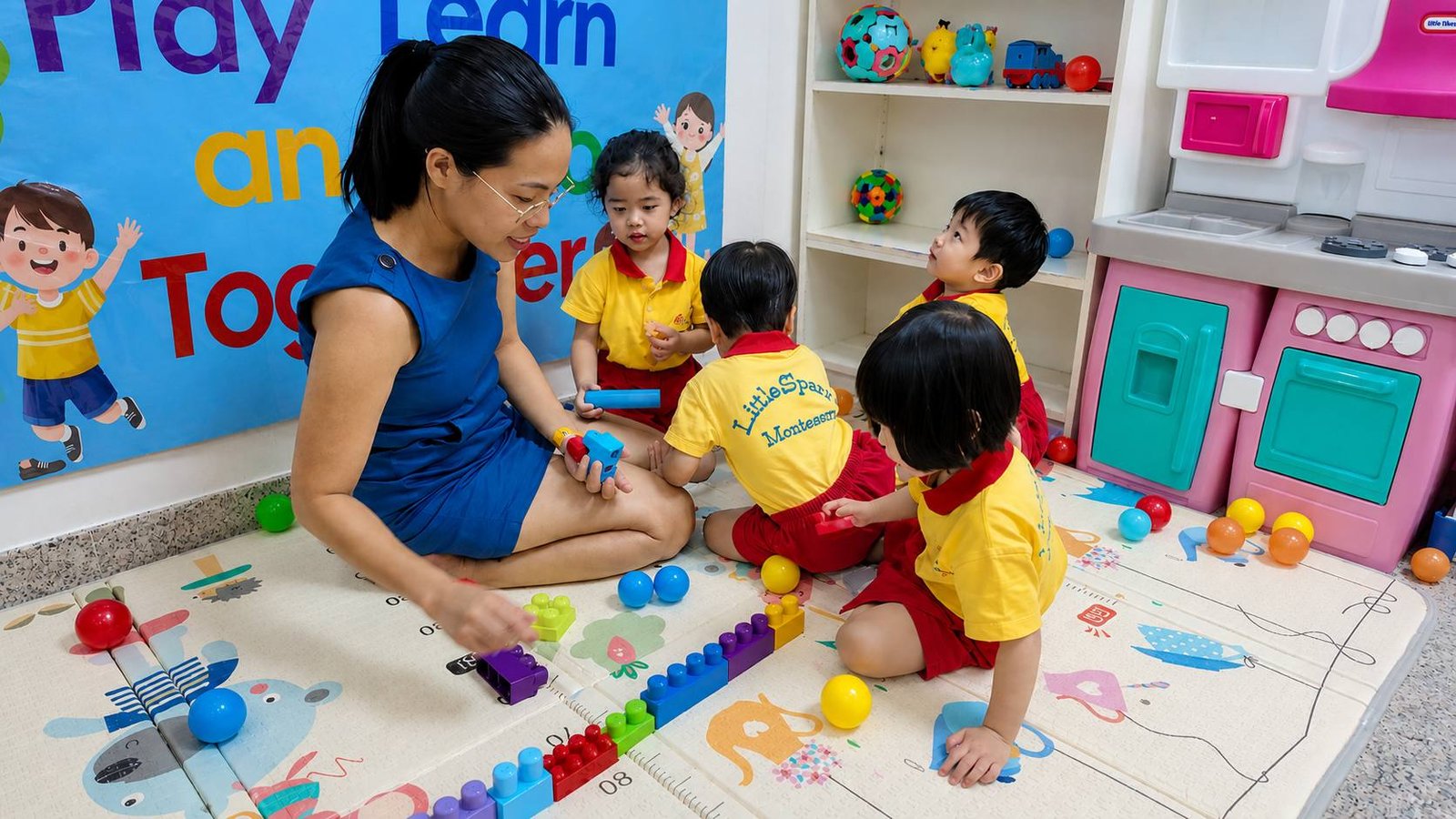 18 months – 3 years
A gentle introduction to school — building independence, coordination, and confidence through hands-on exploration using Montessori materials, in a calm, prepared environment.
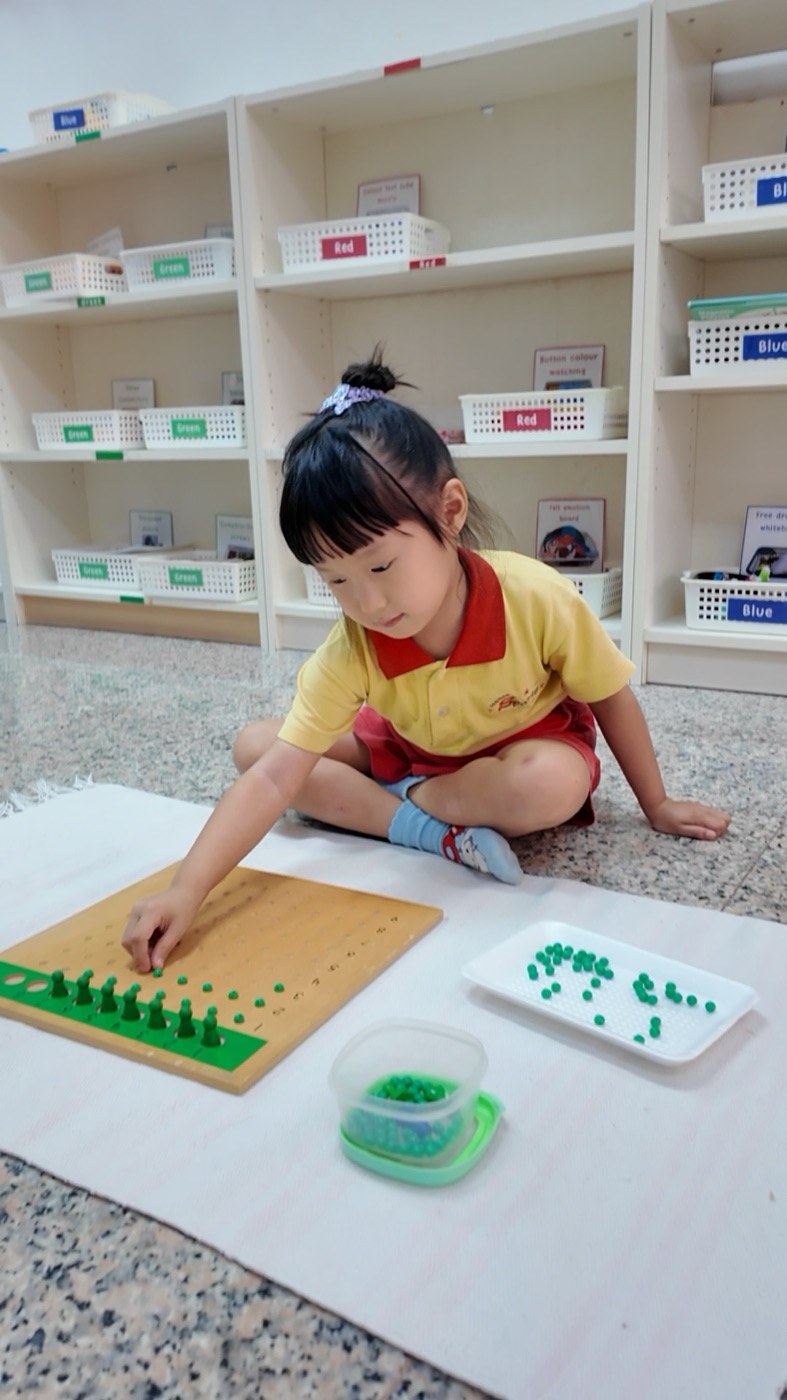 3 – 4 years
Children begin to work more independently, developing early concepts in literacy and numeracy.
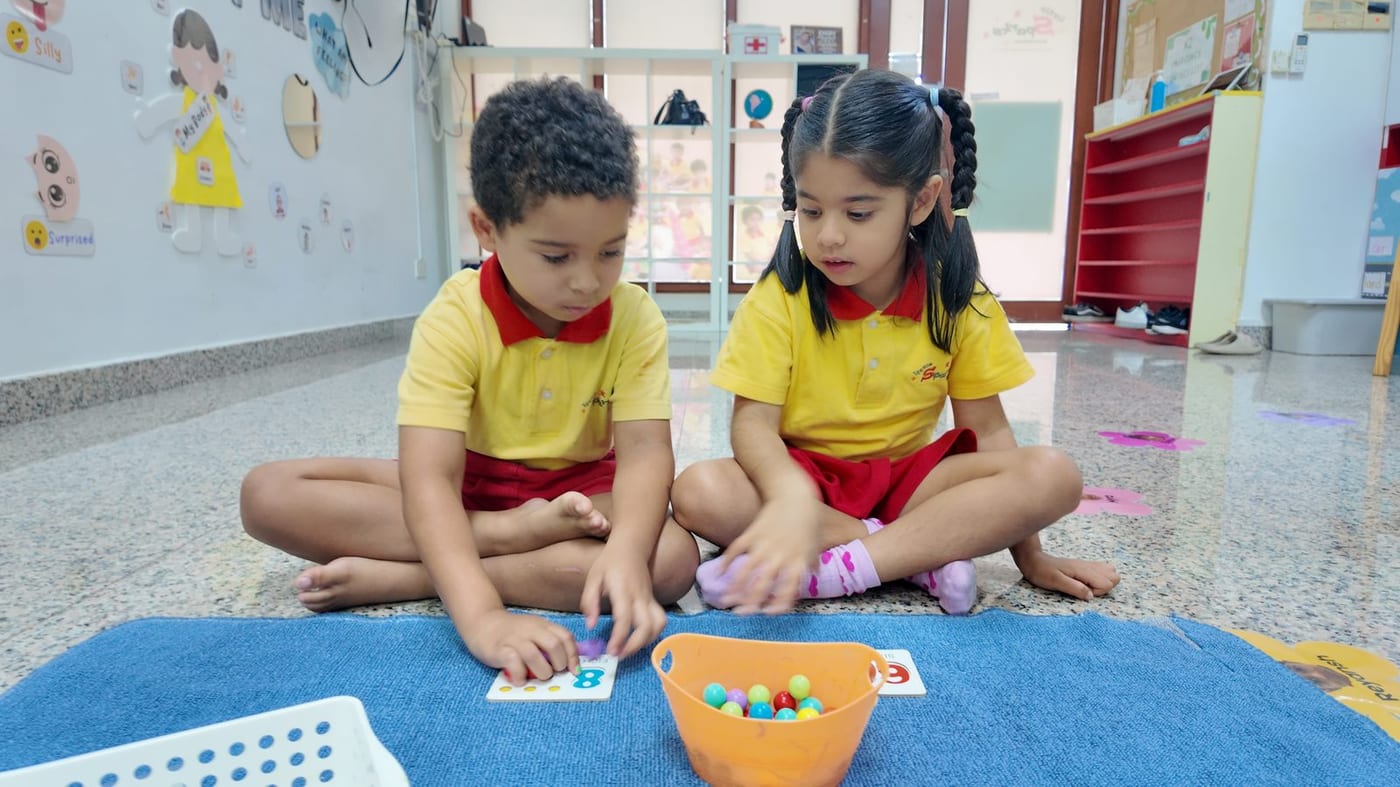 4 – 5 years
Children deepen their understanding through structured Montessori work in reading fluency, writing, and mathematics.
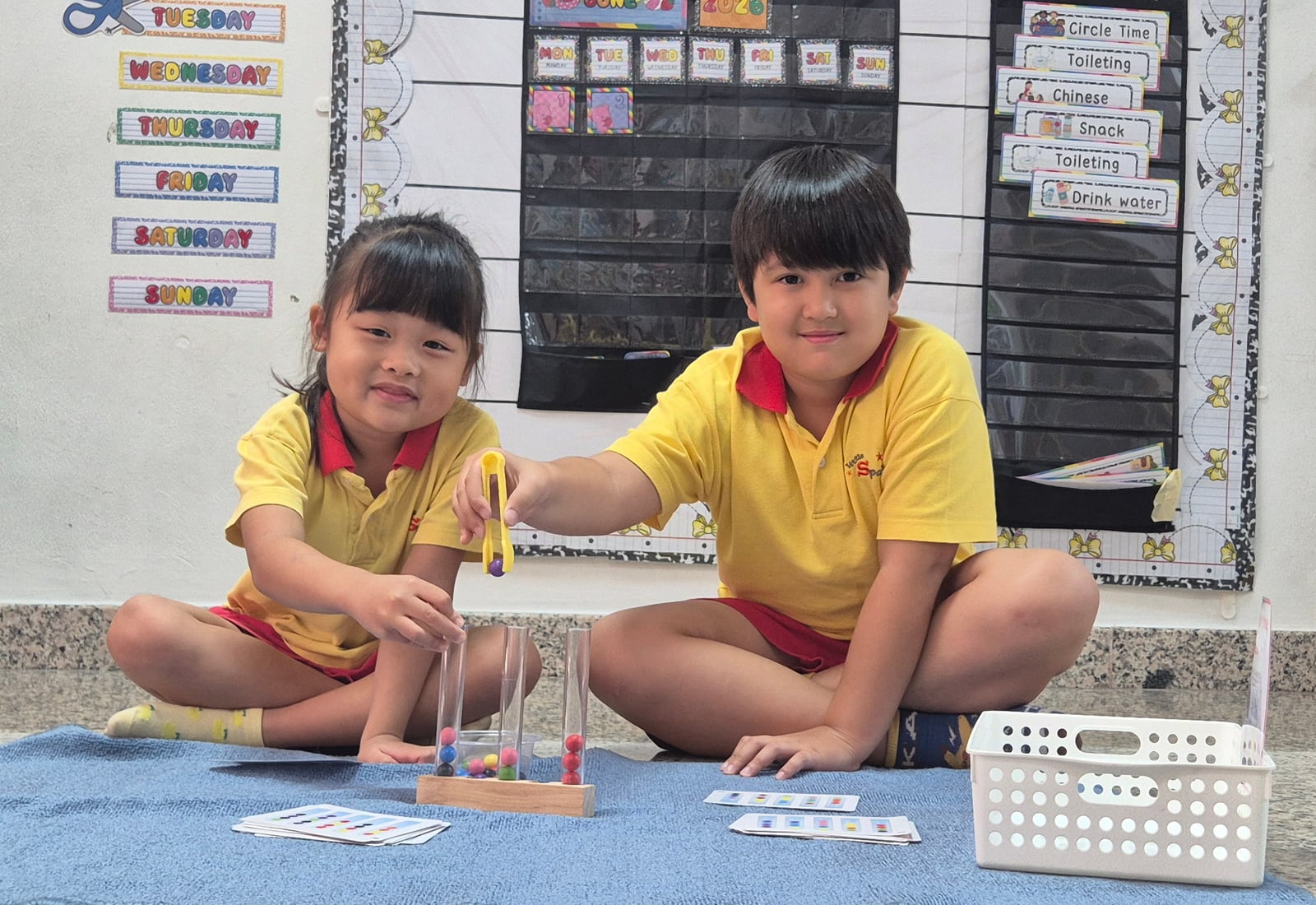 5 – 6 years
Children consolidate their learning and are gradually introduced to structured academic work, ensuring a confident transition to Primary 1.
Our curriculum remains fully rooted in Montessori principles, adapted with structured academic preparation so children transition confidently into Primary 1 — without losing the curiosity and independence Montessori is known for.
Children work with a full range of Montessori materials under the guidance of trained educators.
Additional structured phonics and math practice is introduced to familiarise children with classroom expectations.
Children first learn through hands-on concrete materials before progressing to written and abstract work, building deep understanding.
The two areas parents ask about most — and where the Montessori approach makes the biggest difference.
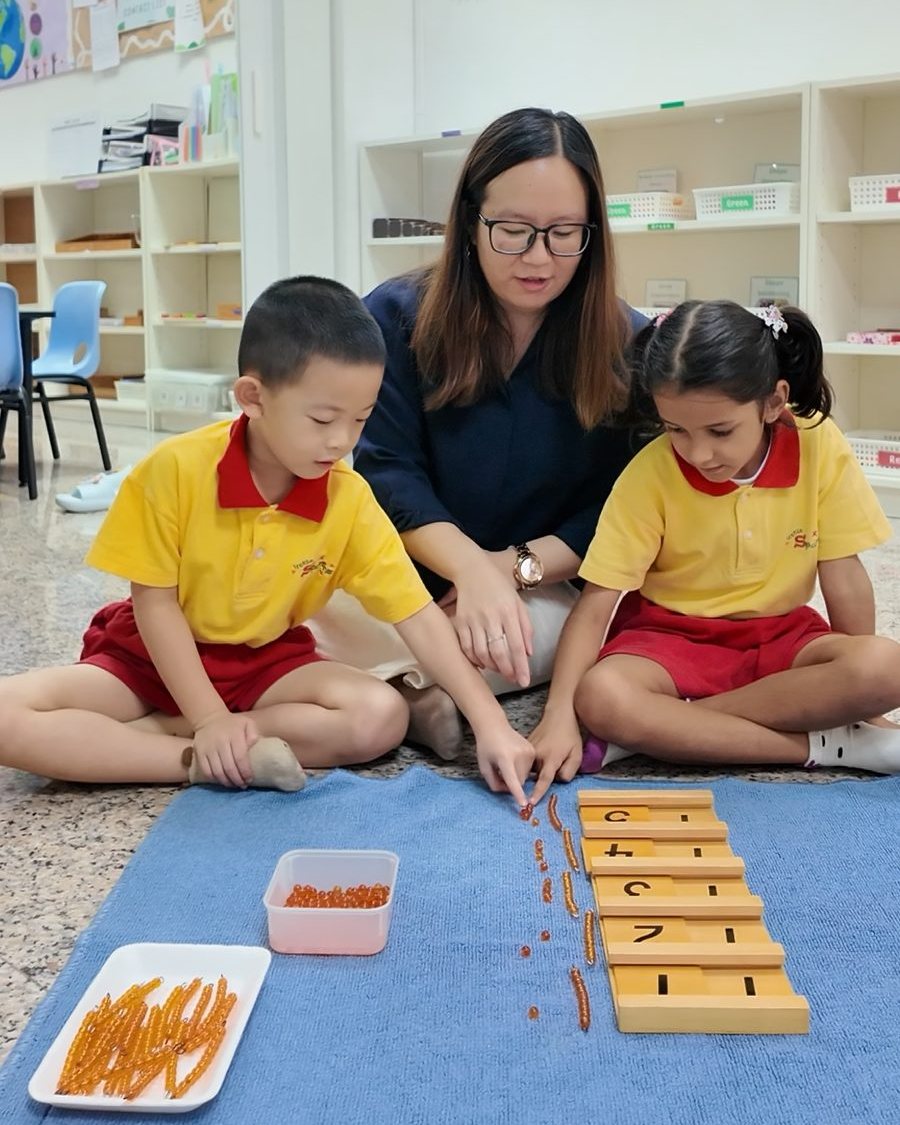
Children experience numbers as tangible concepts through materials such as golden beads, learning place values and building true understanding of operations, as well as learning concepts such as time, money, multiplication and division.
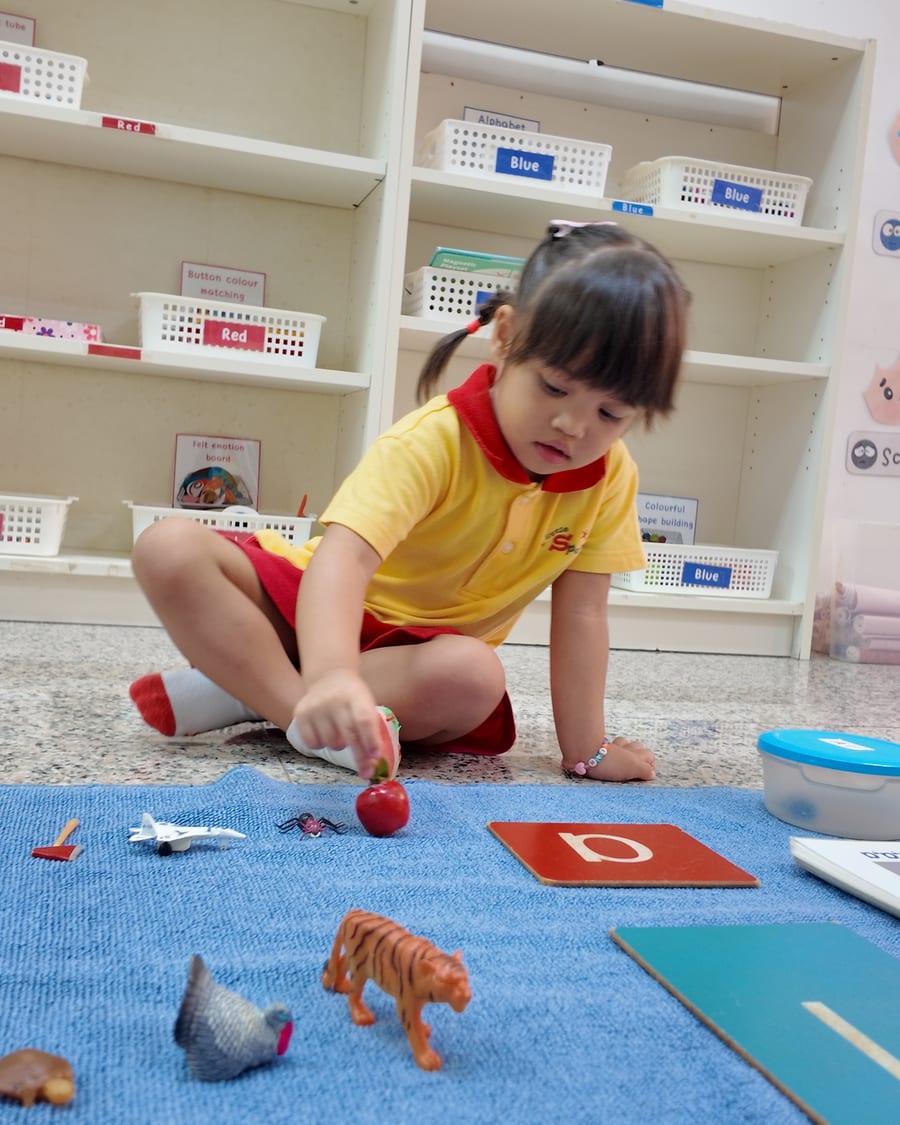
A systematic phonics approach allows children to learn letter sounds, build words using moveable alphabets, read, and write through understanding sounds — not memorisation.
Low teacher-to-child ratios ensure each child is observed, guided, and supported individually.
Learning is paced according to the child — never rushed or standardised.
Visit us, walk the classrooms, meet the teachers — and see what a real Montessori day looks like.